Concacaf countries considering withdrawing support for under-fire Gianni Infantino
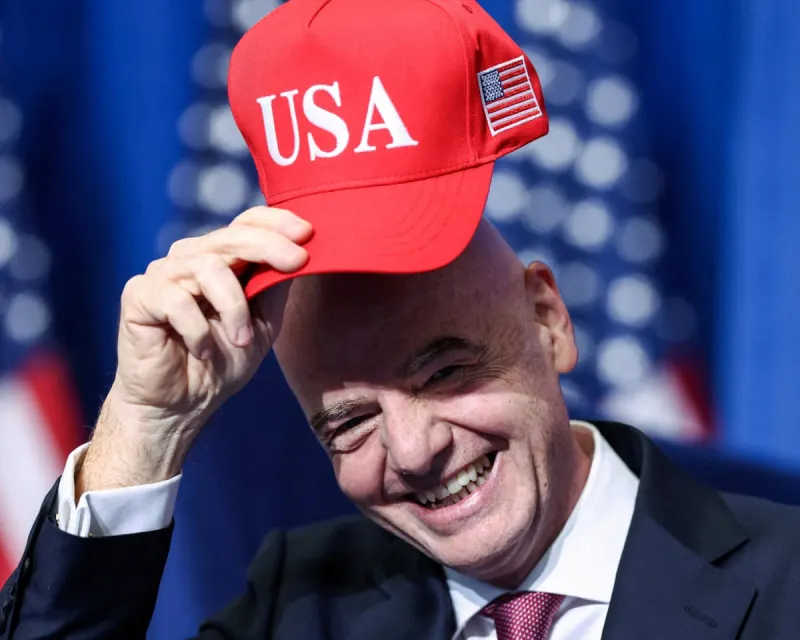
A significant number of Concacaf nations are following Europe's lead by formally withdrawing their support for Fifa president Gianni Infantino, according to sources close to the confederation. All 41 Concacaf members had submitted letters of endorsement for Infantino's re-election campaign before the World Cup, but an emergency meeting held last Friday has galvanised a united front against him, mirroring the stance already taken by Uefa.
The Concacaf Mobilisation
At the emergency Concacaf meeting, all member associations demonstrated strong alignment with Uefa's calls for Infantino to step down. A source who attended told the Guardian that the meeting featured pledges from several countries to withdraw their backing for the Fifa president, with some believed to have already done so in private. The development follows public withdrawals by Finland, which became the first of Fifa's 211 member associations to withdraw its letter of support last Thursday, and the FA of Wales, whose chair Laura McAllister had proposed a World Cup boycott at an emergency Uefa meeting the previous week.
Strategic Complications
However, Concacaf faces a complex situation that may constrain the actions of some members. Four of its nations—the United States, Mexico, Costa Rica and Jamaica—are bidding to stage the 2031 Women's World Cup, a hosting decision that must be approved by Fifa at an extraordinary general meeting scheduled for November. The United States Soccer Federation is understood to be deeply unhappy with Infantino, particularly regarding backlash created by his dealings with Donald Trump over the Folarin Balogun affair, yet the political sensitivities surrounding their World Cup bid may limit their ability to move against him openly.
A further complicating factor is the position of Concacaf president Victor Montagliani, who has been widely touted as a potential candidate capable of challenging Infantino in the March presidential election. Although Montagliani has called for a thorough review of Fifa's governance, the Canadian has not yet decided whether to stand, with his current priority being re-election as Concacaf president, whose elections will also take place next year.
Divided Asian Front
In contrast to Concacaf's unified stance, the Asian Football Confederation, which also initially backed Uefa's opposition to Infantino's controversial World Cup investment proposals, appears to have fractured. Qatar and the United Arab Emirates have both publicly backed Infantino to stay on, as have smaller nations including Sri Lanka, Lebanon, Kuwait and Bhutan. While most of the AFC's 47 members, including Saudi Arabia, have remained silent, Uefa is hopeful of attracting their support, though it remains unclear whether the rebels have the numbers to force a genuine electoral contest.
The Mounting Pressure
The international pressure on Infantino intensified following an accusation from Jordan's football association president, who stated that he was told during the World Cup that his nation would benefit if he endorsed the Fifa president. Describing the situation as blackmail, he emphasised that Jordan "did not endorse him before and certainly will not now." Jordan became the first Asian nation to call for Infantino's resignation, bringing the total number of countries urging him to quit to 91. To remove Infantino from office, 106 nations must support the motion.
The erosion of Infantino's position has extended to his own organisation. His senior adviser Carlos Cordeiro resigned last week, describing the plan to sell World Cup stakes as "a bad deal for football." Arsene Wenger, Fifa's chief of global football development, broke his silence on Tuesday to state that the decision to withdraw the project was "absolutely necessary and beyond question," adding "I firmly believe in an independent Fifa that serves our game with commitment transparency and integrity." Even Fifa secretary general Mattias Grafstrom, the second most senior figure in the organisation, addressed the matter in an email to staff, referring to "a sad and reproachable series of events" which were "thankfully concluded with the FFE project permanently abandoned."